
A Bitter Pill
Where is the justice for the North East pit villages left to rot?

I’m angry, simmering under the surface like a pan on the boil. I’m exhausted too, beaten down, and I see those same feelings reflected back at me.
We park near the cemetery at Easington Colliery and start walking. It’s peaceful and well kept, in stark contrast to its surroundings. Heading towards the high street I’m taken aback at how many shops have gone the distance since the last time we were here. The row is shutters and ghost signs, a new barbers with clean windows and bright branding is an outlier. That, and the familiar green sign of the Co-Op further down; the cockroach-like survivor of the high street. Sorry Co-Op.

We walk behind an old man, struggling on his feet down the road to his terraced house. His is one of the few in the row that are occupied. Many are obviously empty: bare windows showing floorboards and dead flies, no signs of life. Others aren’t so blatant but all the signs point to being recently vacated. Covers for gas and electric meters are torn off revealing their innards, some taped up by the gas company in bright yellow.
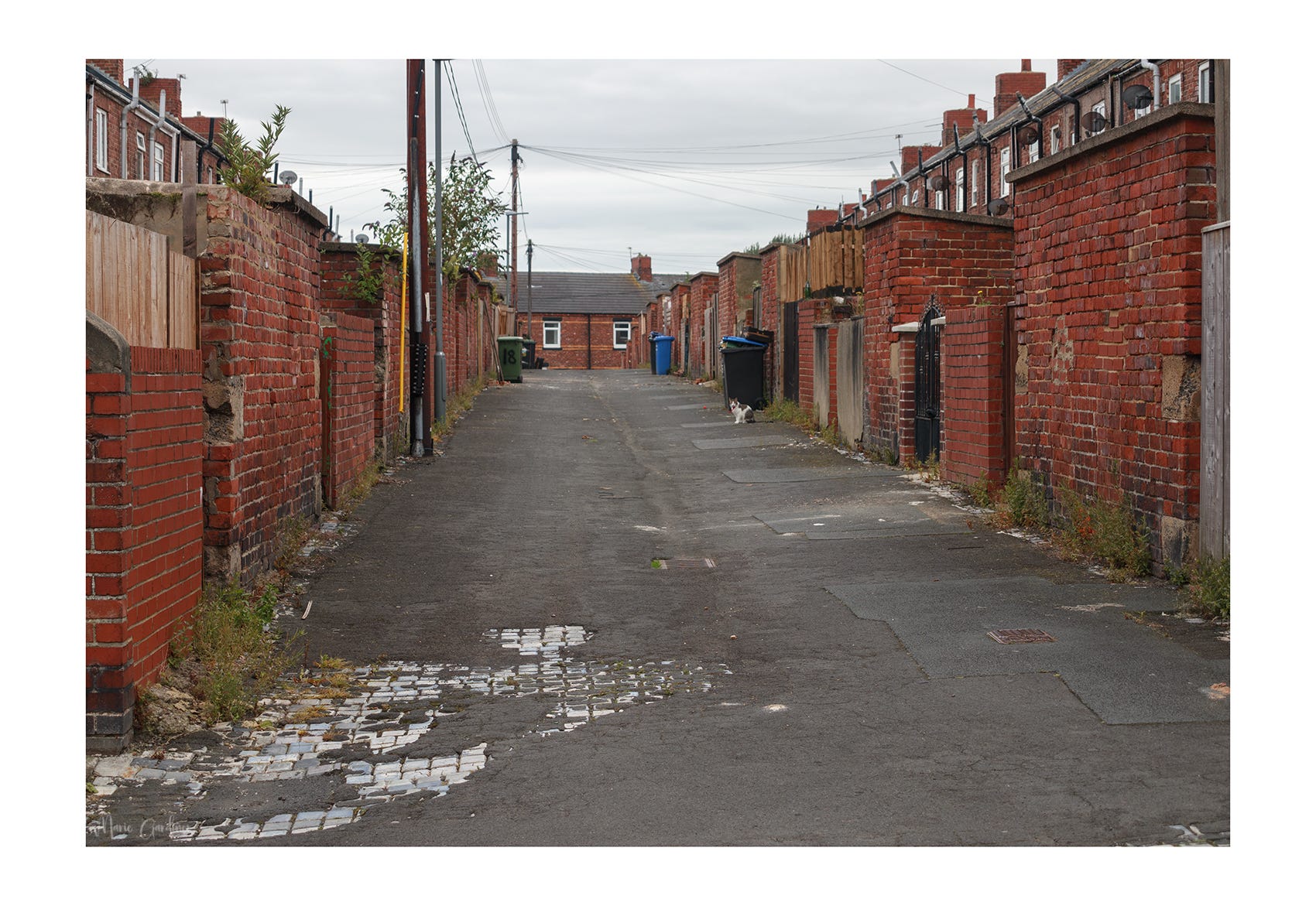
I think of the documentary we’re about to release telling the stories of the people of the Durham Coalfield – filming was the last time we were here – and how these houses, built to serve the pit workers, were even just in the 80s and 90s neat as pins. You can see it from photographs of then, the pride in the area.
We loop around and back up the alley behind the terraces we’ve just passed. Piles of rubbish are everywhere, windows are cracked and broken like rotten teeth. I tell my partner I feel sick even taking photographs here, like I’m some intruder hell-bent on a bit of poverty porn, airing the community’s dirty washing for the world to stare at. I don’t want to be that. Three years ago we walked around here with residents, talking about how things were during the Miner’s Strike of 84-85, how the communities looked after each other. Things were looking tired and sad then, but now? I’m angry. I’m more than angry, I’m incensed. The people here are owed. Their means of working, of living, was ripped away in such a short time and replaced with what? Absolutely nothing. You can see, you can see, with your own eyes, why desperate people would vote for change.
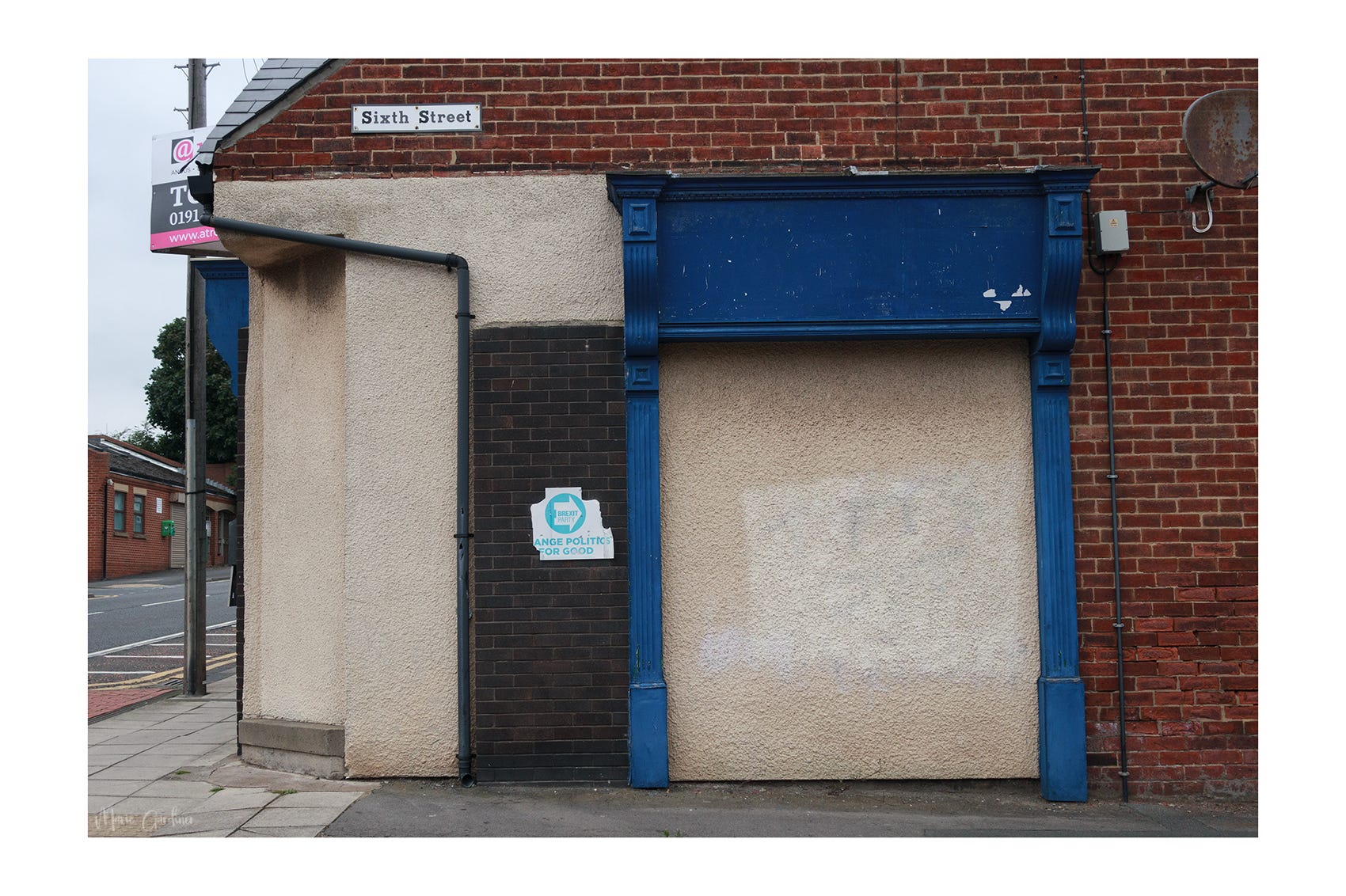
In Blackhall Colliery, faded Brexit Party signs peel away from walls, here – not BC specifically, but parts of the North East - the ‘forgotten’ places were important votes to harness. A man walks down the street past one of the signs, screaming into his phone.
In Horden, a little south of Easington, we park in a quiet street of terraces. Something about them looks odd. Approaching, it soon becomes clear that the windows and doors are fake. They’ve been boarded up, but instead of the cheap wood or metal, they’ve been printed or painted to look like pretty little doors and windows.

It feels obscene. At a glance, the row seems relatively normal, look closer and the buildings are mostly empty. Is this the best we can do for these communities? To sweep the problems under the carpet… a literal veneer over the truth and desperation. Where is billionaire Rishi Sunak now? How I’d love to walk him around these streets and ask him where the support is for these people, who gives a fuck about them? Because Westminster certainly doesn’t. He’s busy heating his swimming pool while here in the numbered streets – yes, they’re called ‘First Street’, ‘Second Street’ and so on – the bedroom tax saw a number of single people priced out of these ‘affordable’ houses, and the private landlords swooped in.
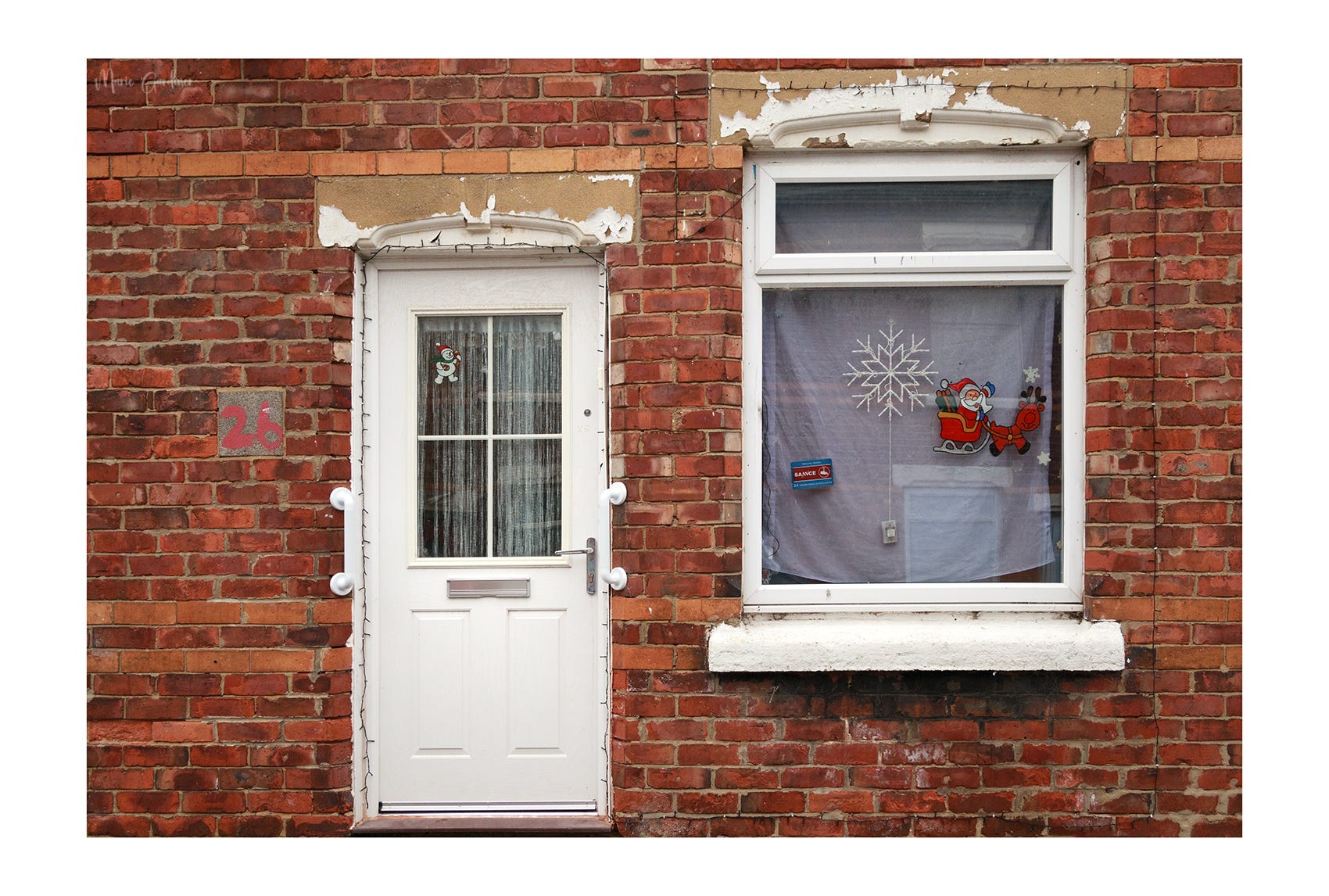
Now, the houses here swing between derelict or empty, the occasional lived-in house given away by a vase or other ornament on the windowsill. The local council begs for help to reduce the skyrocketing crime here. Plans to ‘improve the area’ drawn up, but never funded. A cheery Santa waves from his sleigh on the window of one house. Down an alley, the cobbles break through the tarmac, strewn with dog shit and broken glass. A child’s handprints are on one of the brick walls, in ghost white paint.

Heading back to the car, a young woman belts out Pink’s Just Like a Pill at the top of her voice, falling to us below through the open window, ‘I'm lyin’ here on the floor where you left me.’ Around 30 years since the pits here closed, with little to no investment in the places, or in the people. ‘I haven't moved from the spot where you left me…’ feels a little on the nose.
Powerful Marie, very powerful. I could almost be reading an extract of Orwell's Road to Wigan Pier or Priestley's visit to the northeast in English Journey - and those books were of the thirties. I sadly can't make the premier in Washington of your mining documentary but trust it will have a more general release?